Choosing a high bay by wattage alone is one of the fastest ways to end up with uneven floors, dark rack faces or unnecessary glare. A good warehouse lighting specification starts with the space and the task—not the fixture label.
1. Define the working areas
Separate open storage, rack aisles, picking stations, loading zones and circulation routes. Each area may need a different combination of horizontal illuminance, vertical illuminance and uniformity.
2. Confirm mounting height and obstructions
Mounting height determines beam spread and intensity. Racking, cranes, ducts and sprinklers can also block light or restrict fixture positions.
3. Choose optics before wattage
Narrow aisle optics can improve vertical rack illumination. Wide distributions work better in open production and sorting areas. The correct optic often reduces the need to increase wattage.
4. Plan controls by occupancy pattern
Sensors create the most value in spaces with intermittent use. Group fixtures by functional zone and maintain safe background levels between active areas.
5. Request a lighting calculation
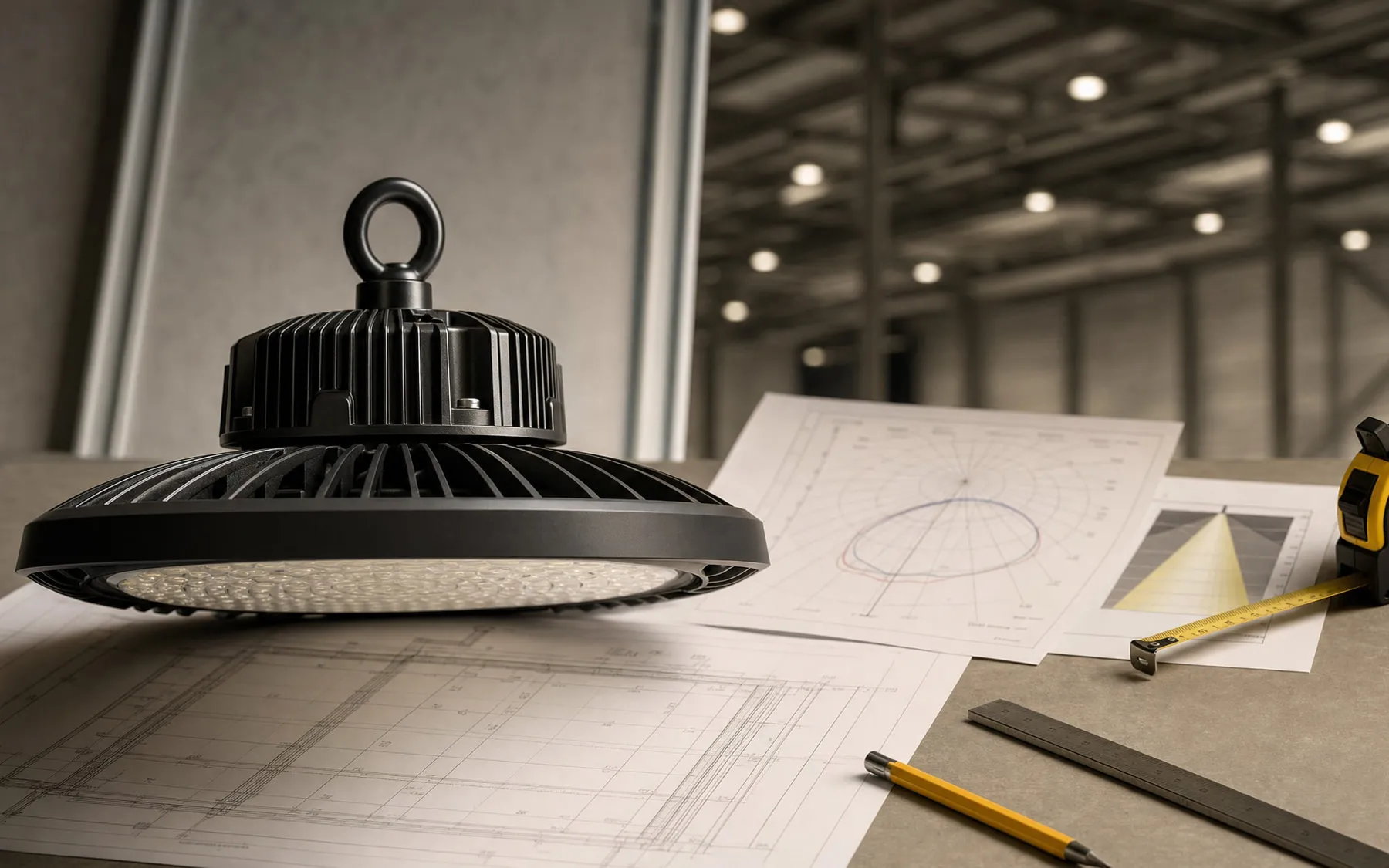
A Dialux or Relux model should show maintained illuminance, uniformity, fixture positions and assumptions. Use it to compare proposals on the same basis.
Before requesting a calculation, prepare a plan, mounting height, reflectance assumptions, target lux and operating schedule.