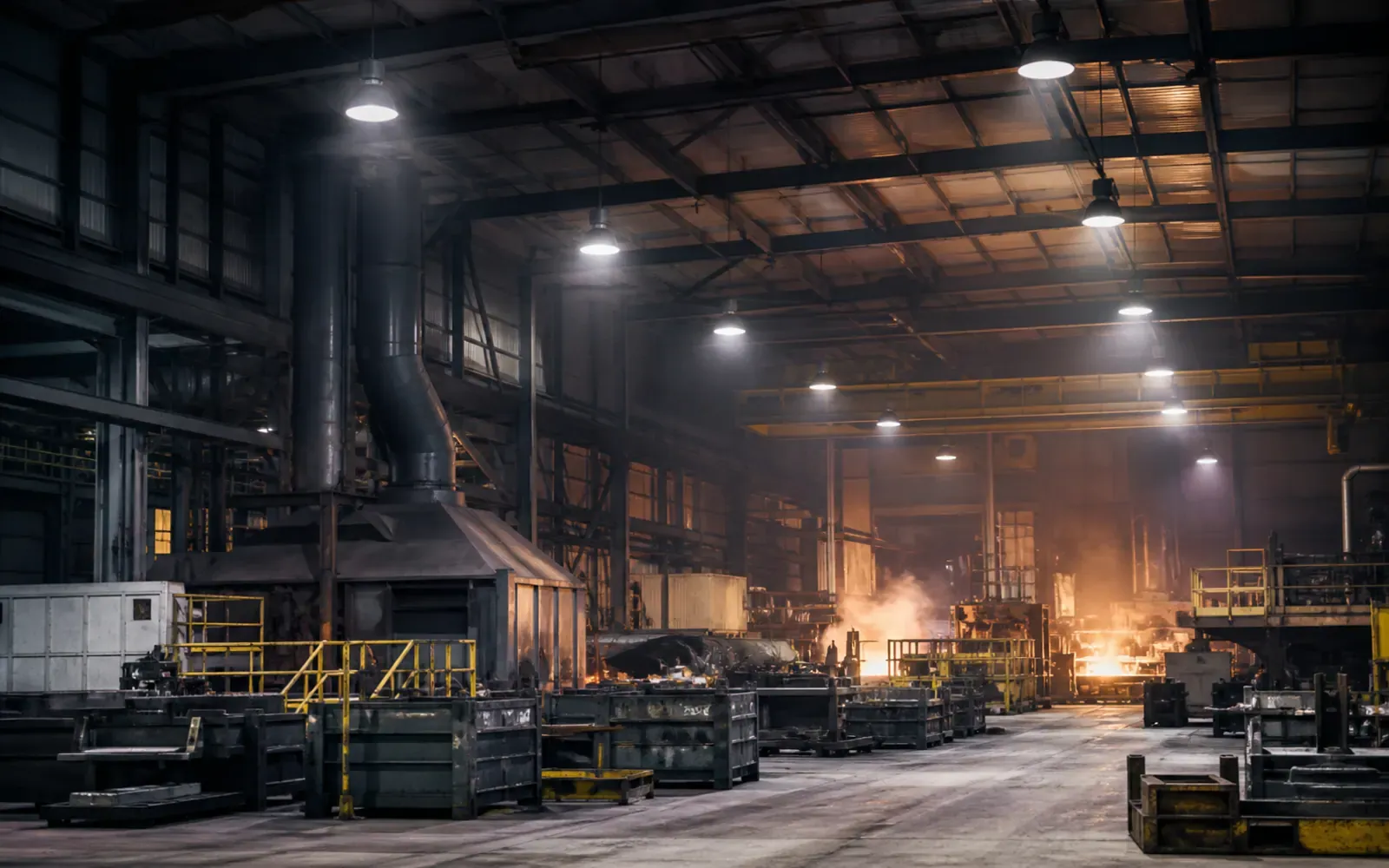
The temperature printed on a weather app is not the temperature experienced by a high bay above a furnace, foundry line or poorly ventilated roof. B2B buyers should specify against a measured thermal profile at the luminaire and driver, including shutdown and restart conditions.
Key principle: the complete configured luminaire must be rated for the measured ambient. A high-temperature LED board does not compensate for a standard driver, sensor, cable or emergency battery.
Measure where the luminaire will operate
Place temperature loggers near representative fixture positions during production. Capture normal shifts, cleaning, idle periods, seasonal peaks and restart after shutdown. Note radiant heat, airborne oil and dust, roof stratification and local exhaust flow.
Report at least the normal continuous ambient, credible maximum, duration above thresholds and minimum start temperature. If the process changes by batch, document the worst recurring cycle.
Identify the thermal bottleneck
LED junction temperature matters, but the driver and electrolytic components are often more sensitive. Ask the supplier for:
- maximum rated ambient for the exact configuration;
- driver case-temperature limit and measurement point;
- thermal test setup and mounting orientation;
- output derating or protection behavior;
- effect of sensors, surge devices and emergency packs;
- warranty terms at the specified ambient.
Do not infer complete-luminaire life from an LED package report. Our LM-79, LM-80 and TM-21 guide explains why these documents answer different questions.
Consider a remote driver
Moving the driver below the hot roof layer or into a cooler service zone can improve maintainability and reduce thermal stress. However, remote mounting adds cable length, voltage-drop considerations, connectors and installation labor. Confirm the maximum permitted LED-to-driver distance and electromagnetic compatibility of the tested arrangement.
A remote driver also has to remain accessible without entering hazardous process areas. Include its location on the calculation and electrical drawings.
Keep optics and heat sinks clean
Dust and oil films reduce light output and insulate heat-dissipating surfaces. Select a housing that matches the site’s cleaning method. Define a realistic maintenance factor in the lighting calculation and a cleaning interval in the maintenance plan.
Open fins may dissipate heat well when clean but collect contaminants in some processes. Smooth housings can be easier to wipe but need enough thermal surface. There is no universal winner; test against the actual environment.
Specify controls for the temperature range
Sensors and dimming accessories need their own ambient ratings. A control placed inside a hot driver cavity can face a different condition from an externally mounted sensor. Verify low-end dimming and restart after thermal protection activates.
For addressable factory zones, compare DALI-2 and 0–10V high-bay controls. Avoid control schemes that repeatedly switch a hot driver unless the manufacturer confirms the intended duty.
Run a thermal pilot
Install production-representative samples at the hottest practical locations. Use the final bracket, cable, surge protector, sensor and driver. During the pilot:
- log ambient and driver case temperature;
- verify light output and dimming through the process cycle;
- inspect for contamination and discoloration;
- test restart after the longest planned shutdown;
- record power quality and input voltage;
- compare measured temperature with warranty conditions.
Independent laboratories can evaluate luminaires for extreme temperature, humidity, vibration and environmental exposure (UL lighting performance testing). Request evidence tied to the ordered model rather than a family brochure.
RFQ checklist for hot workshops
- Measured ambient profile at mounting height
- Process radiant-heat sources and fixture distance
- Input voltage, frequency and power quality
- Required light level, uniformity and maintenance factor
- Complete configuration and rated ambient
- Thermal report with driver case measurement
- Derating and protection behavior
- Cleaning method and contaminant description
- Warranty at stated temperature
- Pilot quantity and acceptance period
The UFO LED high bay product family can be configured for demanding workshops, but the correct output and thermal option depend on project data. Send the temperature log with the floor plan so the supplier can make a reviewable selection instead of a generic “high-temp” claim.