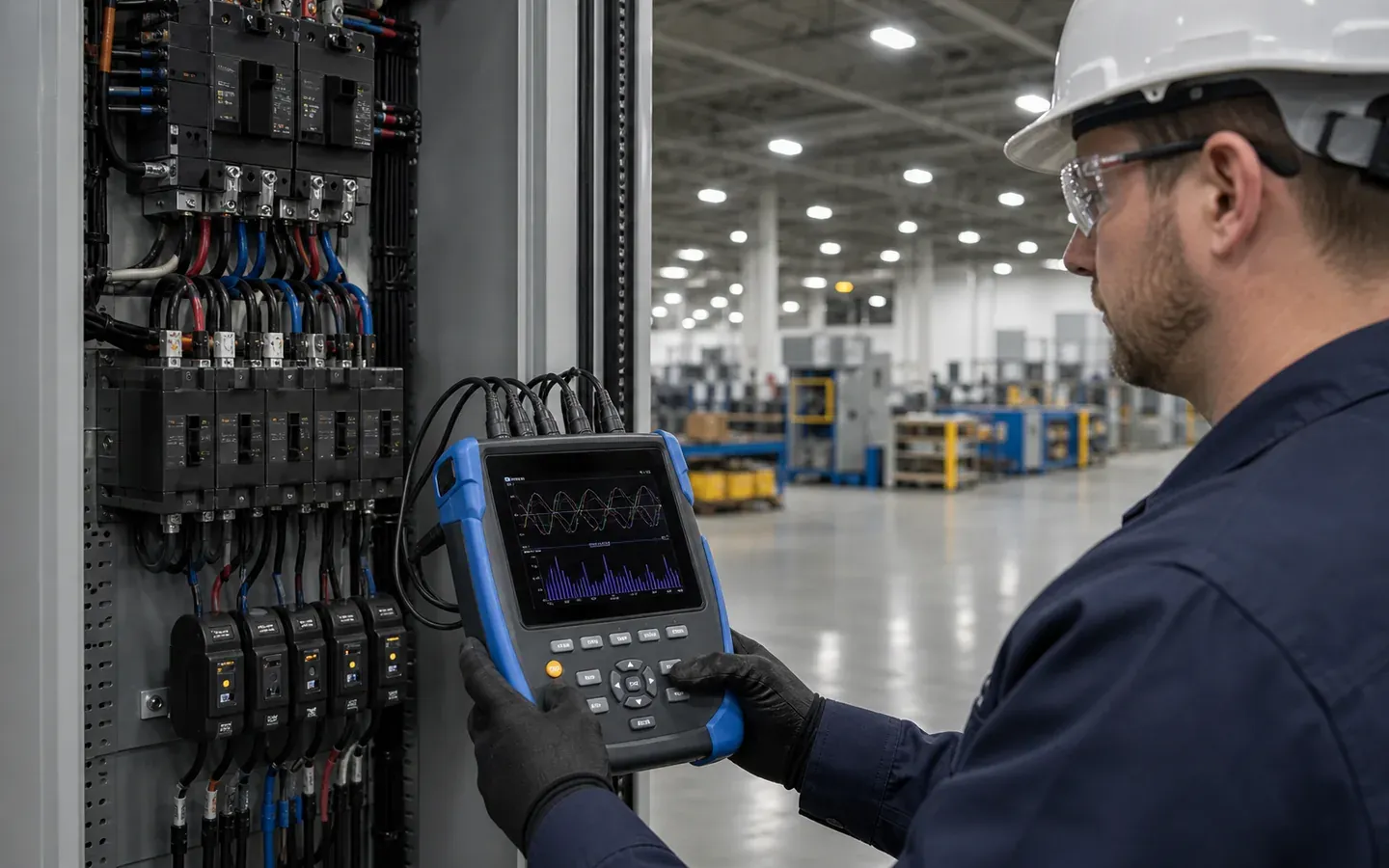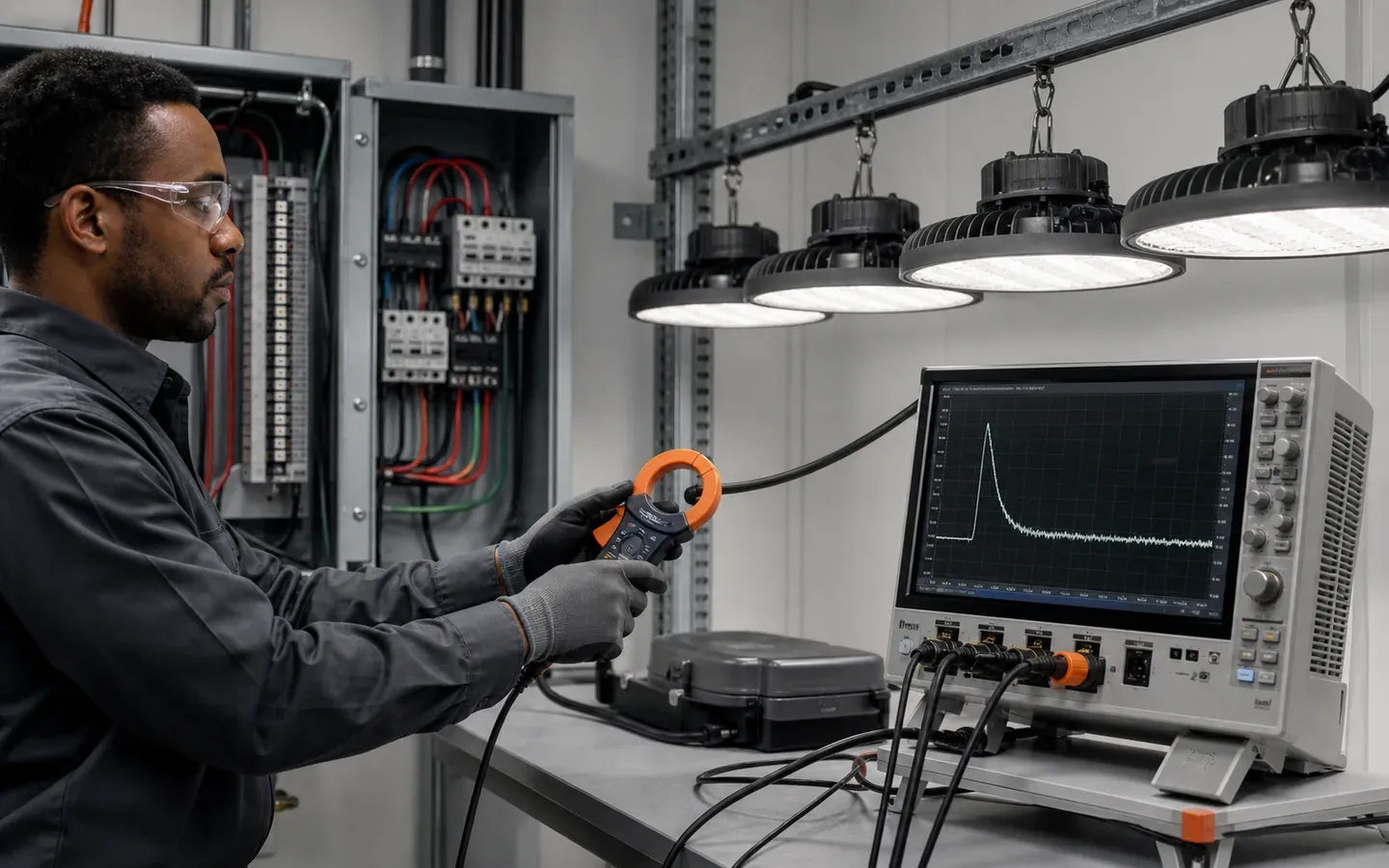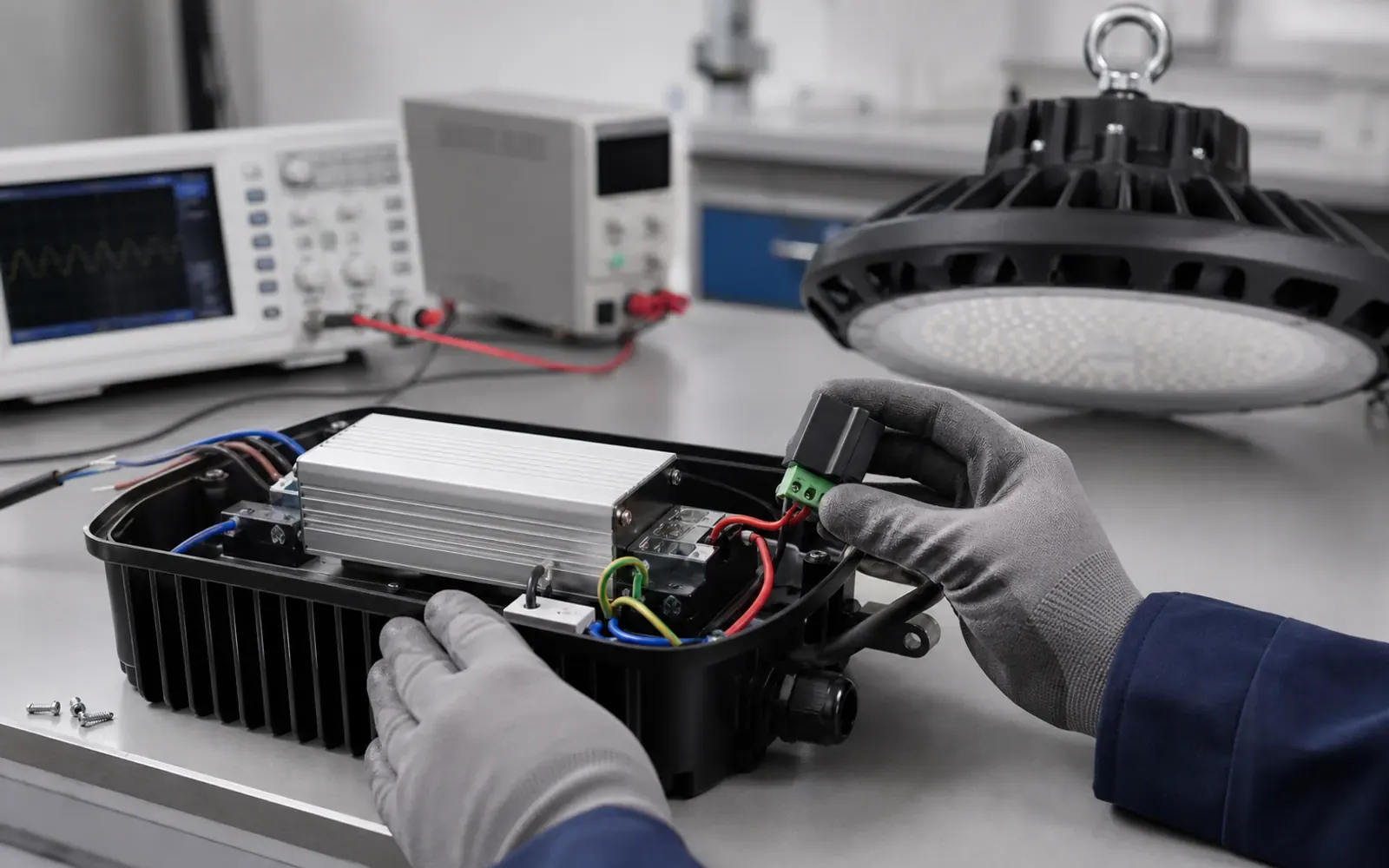
A “10 kV surge protection” line in a datasheet is not enough to predict field reliability. The result depends on waveform, coupling mode, protection level, earthing, upstream coordination and the distance between the protective device and LED driver.
Buyer takeaway: treat the luminaire SPD as one layer in the building’s surge-protection system. Ask for model-specific test conditions and coordinate them with the electrical designer.
Start with site exposure
Record the supply topology, lightning exposure, overhead or underground feeders, transformer arrangement, switching loads and local outage history. High bays in a steel warehouse fed from a stable indoor panel face a different risk from floodlights on remote poles.
Ask the electrical engineer to define the surge environment and protection zones. The luminaire supplier should not guess a voltage rating without this context.
Read beyond the headline kV value
Request the report or test declaration showing:
- standard and test edition;
- combination-wave or ring-wave details;
- line-to-line and line-to-earth modes;
- applied voltage and current;
- positive and negative pulses;
- pass criteria and number of strikes;
- exact driver, SPD and luminaire model;
- behavior after the SPD reaches end of life.
Two devices with the same advertised kV may clamp at different levels or handle different currents. Verify that the residual voltage remains within the driver’s withstand capability.
Coordinate protection layers
Large facilities commonly use protection at the service entrance, distribution boards and sensitive equipment. Good coordination allows upstream devices to handle high energy while downstream devices limit what reaches the driver. Keep leads short and follow the specified conductor routing; long conductors add inductive voltage during a fast transient.
Confirm protective earthing at the mounting point. A line-to-earth SPD cannot perform as intended with a poor or missing protective conductor.
Choose replaceable or integrated protection deliberately
An integrated SPD keeps the fixture compact but may require opening or replacing the whole luminaire after failure. A replaceable module with an end-of-life indicator can simplify maintenance if it remains safely accessible. On high ceilings, the indicator is only useful if facilities teams can inspect it from floor level or through controls.
Define whether the luminaire should fail open, disconnect the load, or continue operating without surge protection after the SPD is exhausted. There is a safety and maintenance trade-off, so make the behavior explicit.
Check power quality beyond lightning
Voltage swells, phase loss, neutral faults, generator transfer and repetitive switching transients may not be covered by a single surge test. Record input voltage and disturbance history. Specify driver over-voltage behavior and recovery.
For outdoor yards and ports, combine surge review with salt-spray and corrosion requirements. A robust SPD does not compensate for water entry or corroded terminals.
Validate the ordered configuration
Safety and performance tests should identify the complete product. UL notes that complete luminaires and internal components have different certification roles, and supports testing to standards including UL 1598, UL 8750 and IEC 60598 (UL lighting standards). Verify the target market’s applicable requirements with the project authority.
For a pilot batch:
- inspect SPD part numbers and wiring;
- verify earth continuity;
- compare production samples with approved drawings;
- record driver and SPD lot codes;
- confirm replacement procedure and spares;
- retain a golden sample for change control.
RFQ wording example
“Provide coordinated surge protection suitable for the scheduled electrical environment. Submit the luminaire-level surge test method, coupling modes, pulse count, protection level, driver withstand data and end-of-life behavior. SPD and driver shall match the approved sample. Supplier shall notify the buyer before changing either component.”
Use this clause together with the project’s engineering specification. It does not replace a lightning-risk assessment or local electrical code.
Record the approved protection stack in the handover file: upstream device, branch-panel device, luminaire SPD, earthing arrangement and replacement part. When a field failure occurs, this record lets maintenance teams investigate the complete path instead of changing drivers repeatedly without finding the exposure source.
For UFO high bays, linear high bays or modular floodlights, include the site distribution diagram in the RFQ. That allows the quotation to distinguish standard protection from a higher-exposure option.