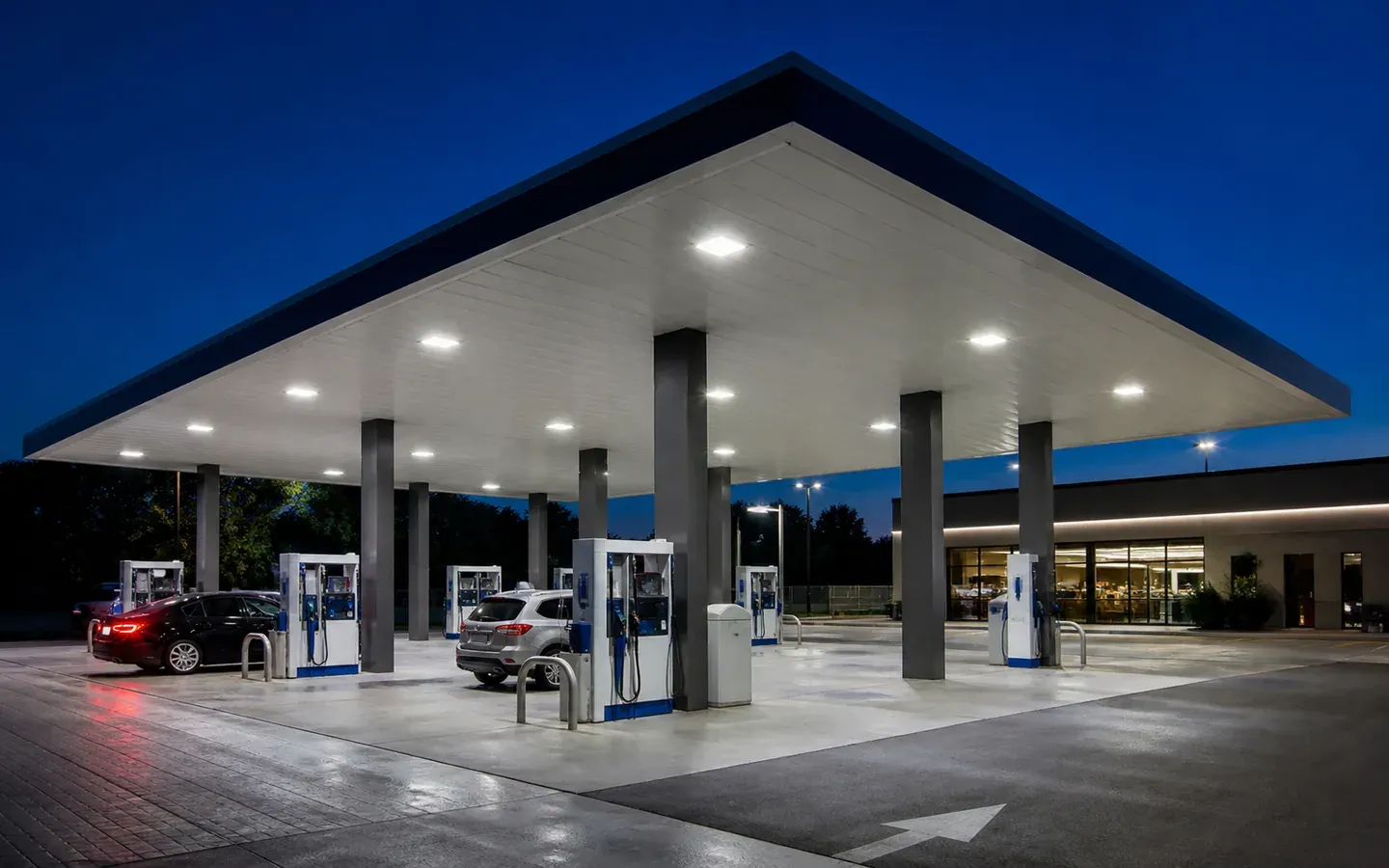
Fuel-station canopy lighting must help drivers, customers and cameras see the forecourt while respecting hazardous-location boundaries around fuel dispensing equipment. A wet-location canopy light is not automatically approved for an area where flammable vapor may be present.
Safety boundary: the project engineer must classify each area and select equipment approved for that classification. Never infer explosion protection from IP rating, metal housing or a generic “gas station” application claim.
Obtain the classified-area drawing first
Request a plan and elevation showing dispensers, vents, fill points, canopy ceiling, pits and equipment. Classification depends on the location and likelihood of flammable vapor, so height and horizontal distance both matter.
OSHA identifies gasoline dispensing and service stations as occupancies where hazardous classified locations may be found and requires each room, section or area to be considered individually (OSHA 1910.307). Local electrical and fire codes define the enforceable boundaries and acceptable protection methods.
Match each luminaire to its actual location
For every fixture position, document:
- zone or division classification, if any;
- gas group and temperature requirements;
- normal ambient and canopy plenum temperature;
- wet/damp exposure and pressure washing;
- mounting type and ceiling construction;
- supply and control circuit;
- required product certification and marking.
If a standard LED canopy light is used outside the classified boundary, state that limitation clearly in the submittal. If a fixture falls inside a classified area, procure a suitably certified product rather than modifying a general luminaire.
Survey retrofit openings and substrates
Existing recessed HID fixtures leave different cutouts, junction boxes and ceiling conditions. Measure opening dimensions, panel thickness, available depth, wiring entry and structural support. Check for corrosion, water paths and fuel-vapor migration before selecting an adapter plate.
The luminaire should be supported by the approved structure, not only a thin decorative canopy skin. Define gasket compression, fastener material and sealing around retrofit plates.
Design for visibility without excessive glare
Calculate the forecourt, dispenser faces, payment areas, pedestrian routes and entry/exit zones. Check vertical illuminance for faces and cameras, not just horizontal lux on pavement.
High brightness directly above a driver can cause discomfort and make darker surroundings harder to see. Use controlled distribution, shielding and sensible contrast at the canopy edge. Apply the responsible outdoor lighting principles by targeting light, limiting excess output and using controls where safe.
Verify environmental and electrical evidence
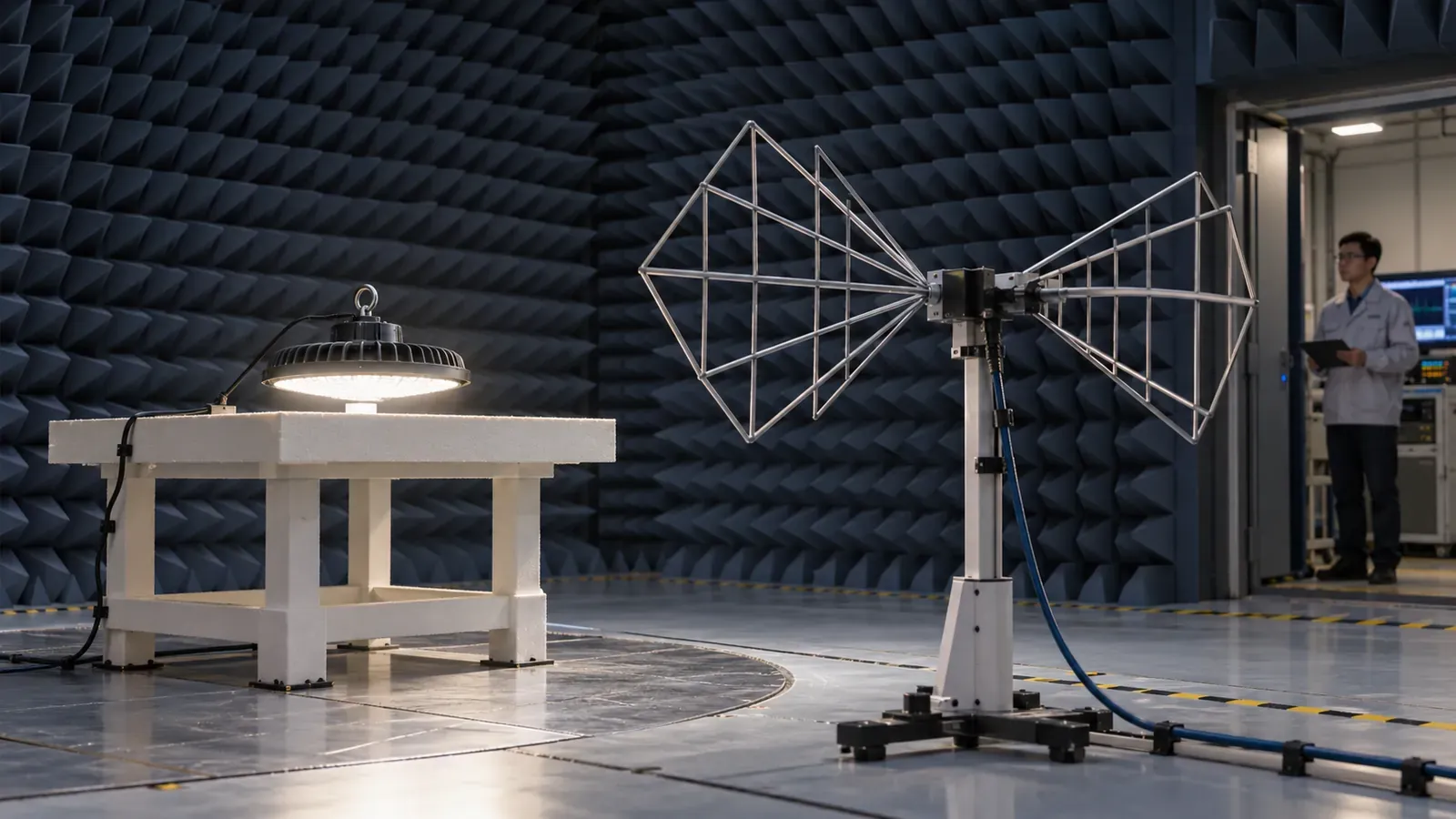
Request complete-product evidence for water ingress, corrosion exposure, impact, thermal operation and electrical safety. Inspect cable glands, junctions and gasket continuity after installation.
Remote outdoor circuits can experience transients. Coordinate the building and luminaire protection using the LED surge guide. If North American listing is required, understand the difference between UL Listed luminaires and Recognized components.
| Submittal | Buyer check |
|---|---|
| Classified-area drawing | Fixture positions agree with zone boundaries |
| Certification record | Exact model and marked classification match |
| Photometric file | Same wattage, optic and trim as quotation |
| Retrofit drawing | Cutout, support and sealing are defined |
| Thermal data | Canopy/plenum ambient is within limits |
| Cleaning statement | Water pressure and chemicals are addressed |
Coordinate controls, cameras and emergency operation
Define dusk-to-dawn, dimming and any occupancy response without compromising safety or security. Confirm camera exposure under dimmed and full-output scenes. Record operation after communication failure and power restoration.
Emergency and egress lighting must follow the approved life-safety plan. Do not assume normal canopy fixtures with a generator circuit cover every code requirement.
Inspect and commission
Before energizing, verify labels, seals, earth continuity, mounting support and classified-location compliance. At night, measure representative points, inspect camera views and approach glare, then record final settings.
Use the pre-shipment inspection guide to keep the factory model, label and installed unit traceable.
RFQ clause
“Supplier shall quote each canopy-light position against the approved classified-area drawing. Submit exact certification and markings where hazardous-location equipment is required; IP rating is not equivalent. Include retrofit dimensions, structural support, sealing, environmental evidence, photometric files, controls and maintenance instructions.”