A pre-shipment inspection (PSI) should confirm that production matches the approved product and is ready to travel. It cannot replace design validation or certification testing, but it can detect quantity errors, substitutions, workmanship defects and weak packaging before the goods leave the factory.
Scope rule: define the lot, sampling plan, defect classes and acceptance criteria before production finishes. “Inspect quality” is not an actionable instruction.
Freeze the reference package
Provide the inspector with the purchase order, approved specification, drawings, label artwork, packaging standard, golden-sample record and change approvals. List critical components and visible identifiers.
If the product definition is unclear, the inspector can only compare units with one another, not with what was purchased.
Confirm lot status and quantity
Record production quantity, packed quantity, unfinished units and rework. Random samples should be selected across cartons, pallet positions, production dates and variants. Do not allow the factory to present a prepared sample group.
Reconcile sellable units, spare parts, accessories and printed materials against the order.
Classify defects by risk
Agree definitions such as:
- Critical: potential safety, legal or certification failure;
- Major: function, rating, durability or saleability is materially affected;
- Minor: workmanship issue that does not materially affect use.
The buyer should select the sampling standard and AQL values appropriate to risk. A generic inspector’s default may be unsuitable for electrical products or a first production run.
Run visual and construction checks
Inspect housing finish, lens, gaskets, fasteners, cable glands, connectors, brackets, safety cables and labels. Compare dimensions and weight with the approved drawing or sample. Open a defined sample quantity where authorized and verify LED board, driver, SPD, wiring, earth connection and optic codes.
Use the factory audit guide to establish process confidence before relying on a final inspection.
Define functional and safety-related checks
The inspection plan may include input power, power factor, dimming, sensor response, CCT screening, earth continuity and other routine production tests appropriate to the design and market. Test equipment must be suitable and in calibration.
A PSI spot check does not recreate accredited certification. UL describes separate safety and performance capabilities for complete lighting products (UL lighting services). Treat certificates and laboratory reports as controlled documents, not items to improvise at shipment.
Use photometric checks intelligently
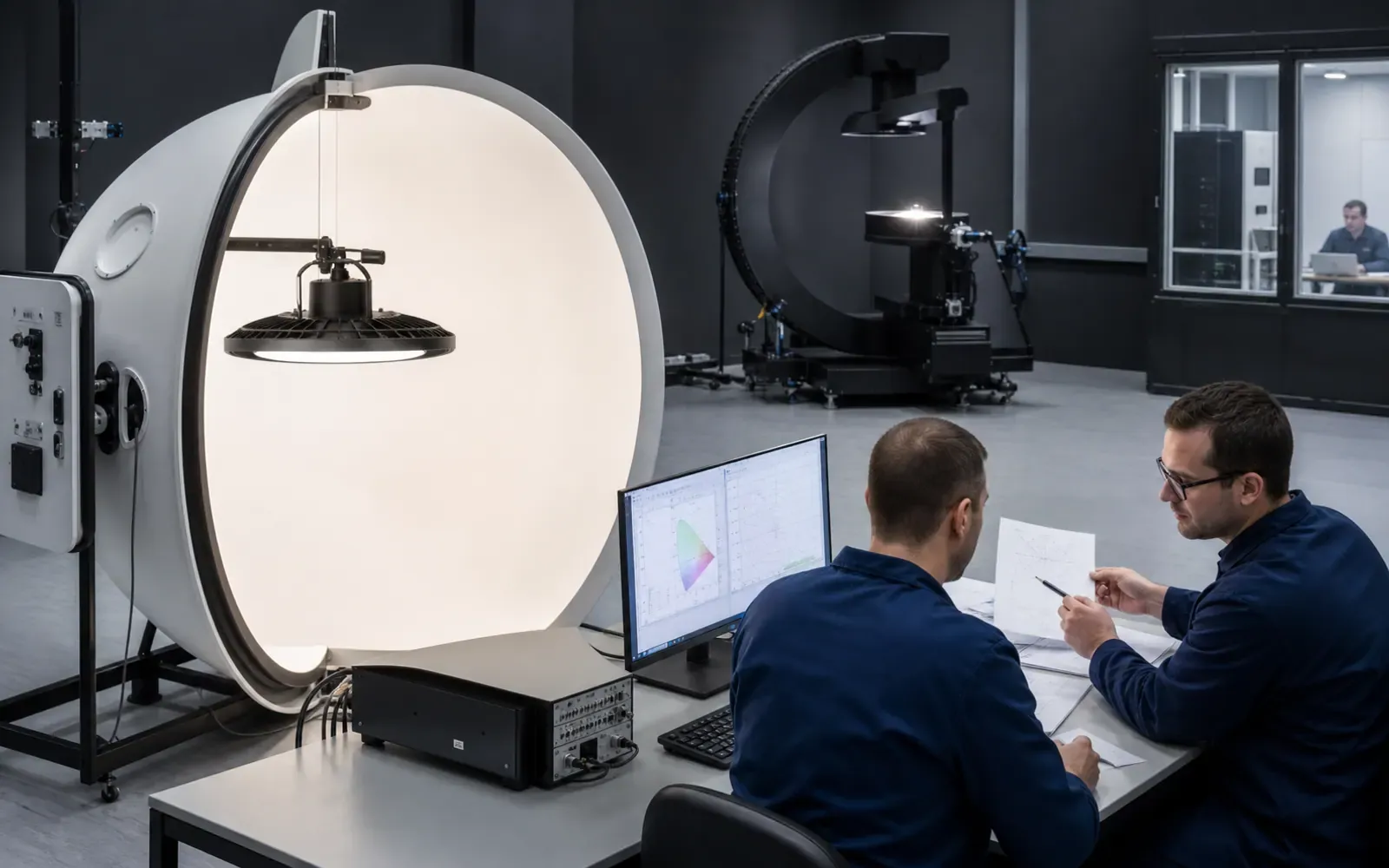
Portable meters can screen gross differences, but integrating-sphere or goniophotometer measurements require controlled equipment. For high-risk orders, take sealed random samples from production for independent photometric verification. Compare them with agreed tolerances, not idealized catalog values.
Confirm that IES/LDT filenames, optic labels and carton codes map to the product. Mixing 60° and 90° lenses can pass a simple switch-on test while failing the project layout.
Inspect packaging as a system
Check product restraint, accessory protection, moisture control, carton strength, barcode readability, pallet pattern, edge protection and stretch wrap. Weigh and measure packed cartons. Photograph the opening sequence so transit damage can be investigated later.
For mixed containers, verify loading plan, heavy-item placement and protection from sharp pallet edges. Confirm container dryness and seal number at loading if that service is in scope.
Write a useful inspection report
The report should contain:
- lot and sample identification;
- sampling method and quantities;
- instruments and calibration status;
- results against each criterion;
- defect photographs with scale and SKU;
- carton/pallet condition;
- unresolved deviations;
- clear pass, hold or fail status under the agreed rule.
If the lot fails, define containment and re-inspection. Do not accept edited photographs as closure for systemic faults; require evidence that all affected units were screened or reworked.
Preserve traceability after release
Retain the report, golden sample, production lot codes, approved deviations and shipment documents. Ensure installed products can be traced back to the shipment. This supports warranty analysis and helps distinguish isolated damage from a production trend.
Combine PSI requirements with the OEM private-label checklist and industrial lighting RFQ checklist. Together they connect what was requested, what the factory approved and what was actually shipped.