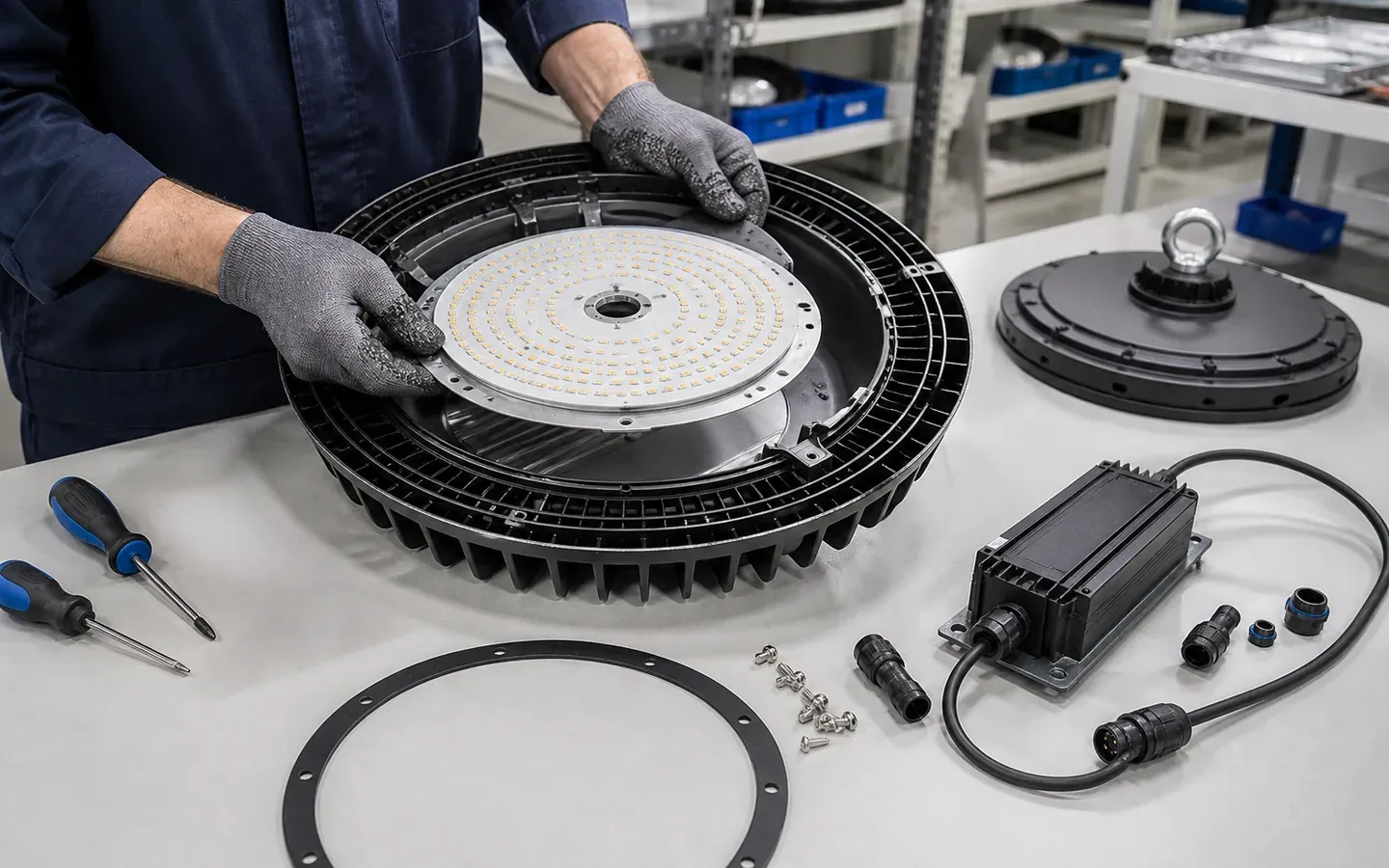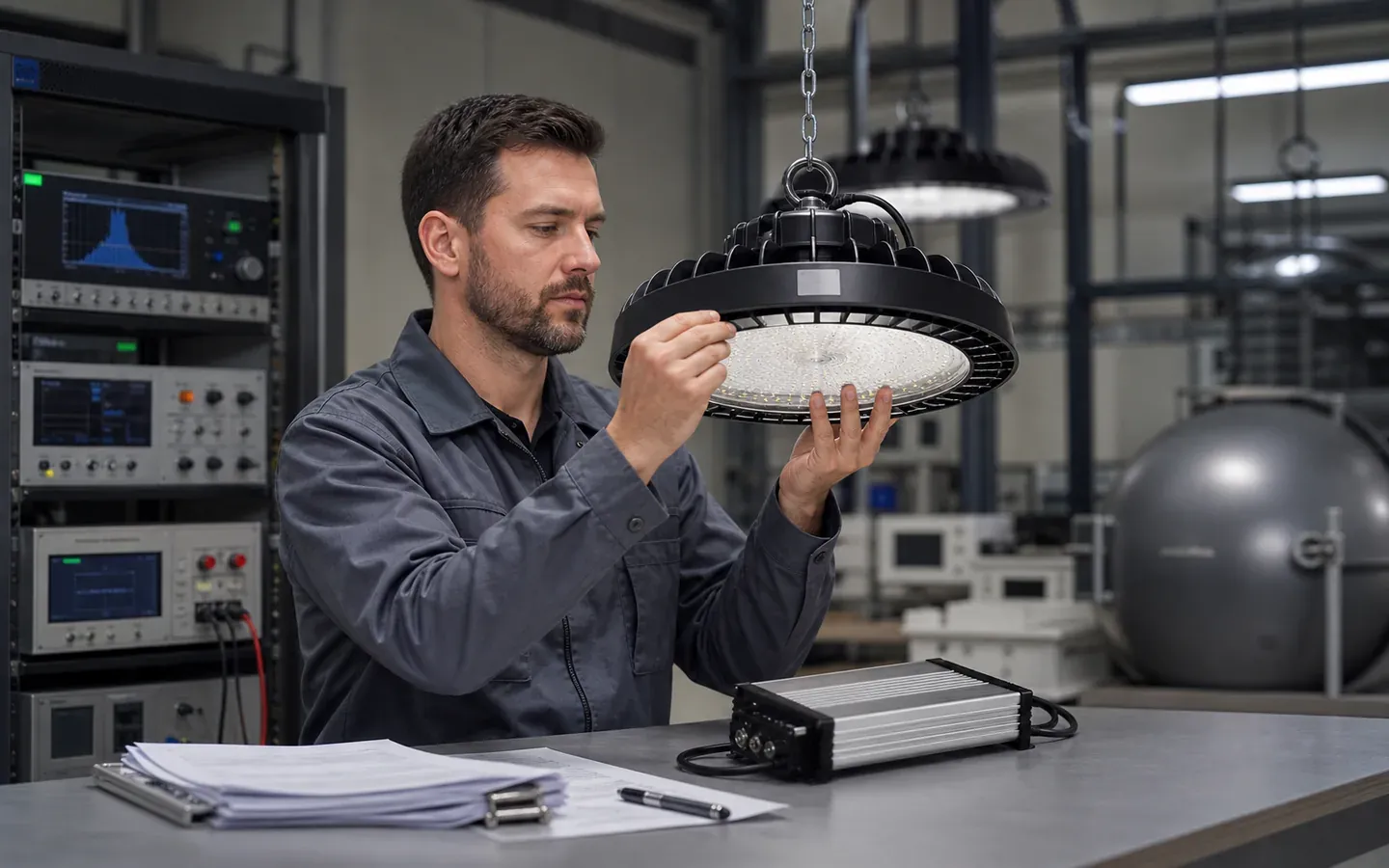
An LED driver carrying a UL component mark does not make the complete high bay UL Listed. That distinction matters to importers, distributors and contractors because the finished luminaire includes wiring, enclosure, thermal management, grounding, optical parts and installation instructions that are not covered by a driver certificate alone.
Buyer takeaway: verify the exact finished-luminaire model in the certification database. Component approvals support the design, but they do not replace certification of the assembled product.
Separate the three claims buyers often hear
UL Listed normally refers to a complete product evaluated for a defined use. UL Recognized Component applies to a part intended for installation inside another product, often with conditions of acceptability. “UL Approved” is not a formal UL certification designation.
UL explains that UL 1598 covers luminaires, while UL 8750 addresses LED equipment used within lighting products. Its lighting standards overview also distinguishes Listed, Classified and Recognized certification marks.
For an industrial high bay, ask which certification applies to:
- the finished luminaire and its installation environment;
- the LED driver and LED module;
- optional sensors, emergency units and cords;
- wet, damp or dry location use;
- the target supply voltage and mounting method.
Match the model number character by character
Request the certification file number and the full model-number construction. Compare it with the quotation, label artwork and approved sample. Prefixes, suffixes and option codes may define wattage, voltage, lens, control, mounting or environmental variants.
A family certificate is useful only when the ordered code is inside the certified construction. Do not accept a screenshot of a similar product. Search the certification directory independently and save the result in the approval file.
Use the same check when buying UFO LED high bays or linear LED high bays. A driver change made after approval can affect certification, thermal behavior, dimming and inrush current.
Read the scope and conditions
The mark must match the intended country and application. Confirm whether the product is evaluated for the United States, Canada or both. Review location ratings, ambient-temperature limits and installation restrictions shown in the certification information and instructions.
For washdown, corrosive or high-temperature locations, certification is only one part of the evidence. Coordinate it with the project’s food-plant washdown requirements or high-temperature high-bay specification.
| Check | Evidence to retain | Common failure |
|---|---|---|
| Complete product status | Database record and file number | Supplier shows only a driver certificate |
| Exact model | Certified nomenclature and order code | Wattage suffix is outside the family |
| Installation scope | Marking and instructions | Dry-location model quoted for a damp area |
| Production label | Approved label artwork | Wrong company name or missing control number |
| Options | Sensor/emergency accessory scope | Unapproved accessory added after testing |
Control private-label and OEM changes
If your brand appears on the luminaire, define who owns the certification relationship and how private-label authorization is maintained. The label should identify the correct listee or authorized private label in the permitted format.
Put certification-critical components on the approved bill of materials. Require written approval before changing the driver, terminal block, cable, gasket, LED board, sensor or emergency module. Include this point in the OEM private-label checklist and factory audit.
Inspect production, not just paperwork
During pre-shipment inspection, sample labels across cartons and production lots. Confirm model code, electrical ratings, environmental markings and certification mark. Open selected units to compare safety-critical components and wiring with the approved sample.
Certification directories can change, so repeat the database check before major shipments. Record the lookup date and retain a PDF or screenshot with the purchase order. The pre-shipment inspection guide explains how to connect document review with physical sampling.
RFQ clause for certified industrial luminaires
“Quote the exact finished-luminaire model covered by the required UL certification for the scheduled location and supply. Submit the certification file number, model nomenclature, marking artwork and installation instructions. Recognized components alone are not acceptable as evidence of complete-product certification. No certification-critical component may change without buyer approval.”
The authority having jurisdiction makes the final acceptance decision. Confirm the applicable electrical code, location classification and project requirements before placing the order.